Conversion Rate Definition
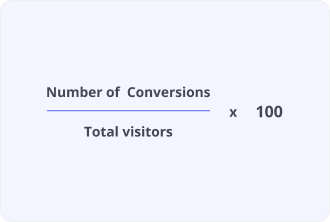
Conversion rate is a very essential metric when studying online marketing and advertising campaigns and strategies. This can be calculated through simple division between the number of conversions and the total number of visitors. The result is normally expressed in percentage.
Divide the number of actions that were taken by visitors, then multiply the result by 100 to get the percentage for conversion rate. As an example, when 1,000 visitors come to the landing page and 50 make a purchase, the conversion rate is 5%.
Even though the calculations are straightforward, the truths discovered from this percentage are very important. It’s often seen as the “thermometer” of a website’s performance, offering a clear snapshot of how efficiently a company communicates its value, engages its audience, and drives results.
Why Conversion Rate Matters
This metric is essential and it helps businesses go further than vanity-related explanations. It tells you whether your digital strategy is in line with what people expect. When more users convert from visitors, it usually means your website or campaign offers value and is well laid out.
Should the conversion rate be too low, that might signal some problems, such as confusing website design, communication at odds with the customers, messy site structure or an inappropriate audience.
The ability to use IFRS for multiple situations is what makes it so helpful. With it, you can evaluate a variety of things.
- Success of your website or landing page
- How successful the advertising campaign is
- Quality of activities aimed at gathering leads
- How redesigning your site or changing your copy can impact the business
- The way visitors access the website from different channels
This means it allows you to detect what’s working well in your online presence and what’s not.
How to Ensure Conversion Rate Benefits Your Business
Instead of seeing the conversion rate as a limit, treat it as something that improves your results further. Firms that find success online pay close attention to their conversion rates, analyze them in detail and keep looking for ways to boost them frequently. Examples of uses for conversion rate analysis:
Find out where the funnel is becoming blocked. Watching conversion rates at each step of the sales funnel allows you to find out why some users do not continue on.
Benchmark performance. Seeing how your numbers match those of competitors or other companies in your industry is very helpful. An impressive 2% conversion may not compare to a different niche’s records.
Try out and improve what you have made. Testing out different headlines, call-to-actions, page designs and offers over time improves your conversion rates.
Break your audience into parts. Check the results of your tracking methods on various platforms, devices and regions to find patterns you can use.
Enhance personalization. By understanding how each segment converts, companies can create content, offers and experiences that suit individual users.
Using conversion data wisely gives brands a competitive edge in saturated markets.
Ways to make your conversion rate better
The best way to rise in conversion rate is to mix up data insights, impressive website design, strong writing and useful experiments. These are steps you can take to start dealing with the issue:
- Keep it simple — each landing page should call for just one step with no other distractions.
- Make your call-to-action stand out and catchy so visitors are motivated to follow it.
- Include proof from customers to establish the credibility of your business.
- Ask for as little information as possible to make the sign-up process smoother.
- Allow customers to reach the information they are looking for in just a few clicks.
Conversion rate reveals strengths, exposes weak points, and guides continuous improvement. With a sharp eye on conversion rates, you can unlock efficiency, amplify engagement, and stay ahead of the curve.