Flag Definition
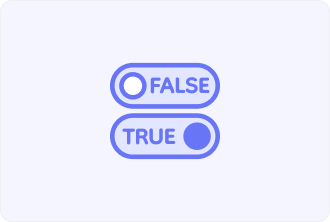
Flag is very central to the control flow of programs and
decision-making in software development. It may be a variable
or one of the bits in the bitmask, showing some general state
of conditions within a program—”true” or
“false.”
They shall generally indicate whether such an operation has
been successful or an error has occurred. In many instances,
these flags can be reset, and checked using logical operators
such as AND, OR, and NOT to perform the desired operation.
Flags enable the implementation of flexible and efficient code
that is dynamically responsive to any number of conditions or
settings, obviating the need for unwieldy structures.
Flags are very relevant to knowing and controlling the status
of hardware components in embedded development, automotive,
medical, or industrial automation sectors. While simple and
valuable, their excessive use in a blurred way makes it
difficult to go through the code or even to maintain it.